Why are condensing boilers more energy efficient?
Originally published 19 November 2013. Some figures and schemes have since changed - see our latest guides.
Condensing boilers are modern water heating technology recognised for superior energy efficiency. Since April 2005, all newly installed gas boilers in the UK must be condensing units, typically achieving efficiency ratings of 90% or higher.
Around 55% of an average household’s energy bills are spent on the boiler, making efficiency improvements financially sensible, as well as reducing carbon emissions.
How do condensing boilers work?
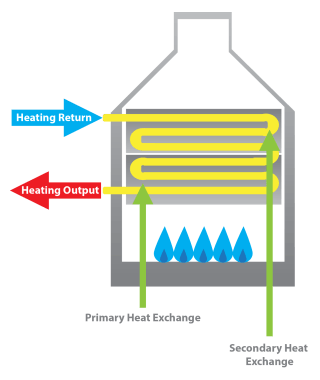
Standard boilers generate heat by burning natural gas, producing carbon dioxide and water vapour that escape through the flue, carrying away 20 to 30% of the energy generated, giving efficiency ratings of 70 to 80%. Condensing boilers recover waste heat by directing exhaust gases through a heat exchanger, cooling and condensing them into liquid. The condensate contains thermal energy previously lost, which pre-heats incoming cooler water. Well-designed units lose only around 10% of energy, with efficiency above 90%.
These units are as reliable as conventional boilers, require no additional servicing and are straightforward to install.
Influence on cost
Initial replacement costs can discourage upgrades, but the investment yields significant long-term savings. According to Energy Saving Trust data of the time, upgrading from a 70 to 74% efficient unit to a 90% condensing model saved over £200 a year for a three-bedroom gas-heated home.
For current pricing, see our guide on new boiler costs in Yorkshire.